 About Wes

What is a Japanese tattoo?
The Japanese tattoo, called irezumi or horimono in Japan, is a tattoo tradition that flourished mainly in the Edo period (1603–1868). It is characterised by large, cohesive compositions: a main motif such as a dragon or koi, combined with a background of wind, water or clouds that fills the entire body part.
Where many tattoos are separate images, a Japanese tattoo is built as one whole that follows the lines of your body. That is why Wes draws every design directly for your arm, back or leg.
Popular motifs and their meaning
- Dragon (ryū): strength, wisdom and protection. More about the Japanese dragon.
- Koi: perseverance; according to legend, the koi that swims up the waterfall turns into a dragon.
- Tiger (tora): courage and protection against illness and evil spirits.
- Hannya mask: from Noh theatre; stands for jealousy and passion, and is also seen as protective.
- Peony, chrysanthemum and cherry blossom: wealth, long life and the transience of life.
- Daruma: perseverance and reaching your goal: fall down seven times, get up eight.


Japanese tattoos by Wes



Sleeve, back piece or bodysuit
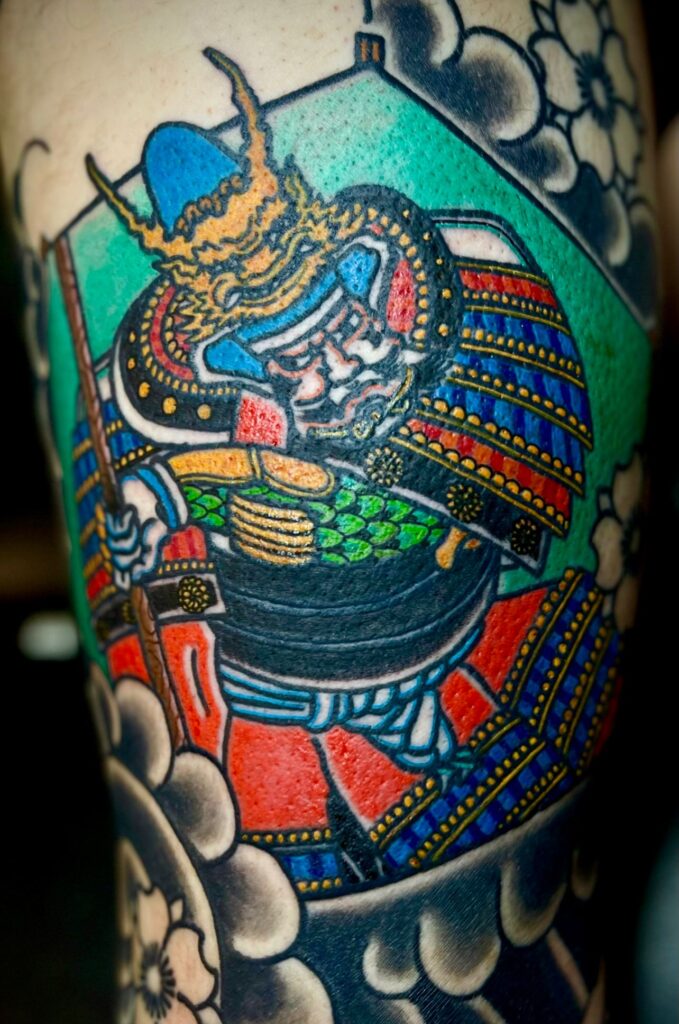
Japanese tattoos are often done large. A full sleeve (arm) or a back piece takes several sessions, with time in between for the skin to heal. Wes plans such a project with you in advance: first the outline of the whole design, then shading and colour in follow-up sessions.
Starting small? That works too. A single motif can be placed so that it later becomes part of a larger whole.
How the process works
- Enquiry: tell us which motif, placement and size you have in mind.
- Consultation: Wes advises on composition, placement and the number of sessions.
- Design: the design is drawn for you and fitted to your skin on the day of the session.
- Sessions and aftercare: you receive aftercare instructions and can ask questions at any time in between.
Respect for the tradition
A good Japanese tattoo follows rules: which flower belongs with which animal, which seasons go together and how background and motif reinforce each other. Wes knows this visual language and makes sure your tattoo is right, even when you show it twenty years from now.
Frequently asked questions
How long does a Japanese sleeve take?
That depends on the design, the amount of colour and how your skin responds. A full sleeve is built up over several sessions. Wes gives an estimate after the consultation.
Can I choose between colour and black and grey?
Yes. Japanese tattoos can be done in colour or in black and grey. Wes advises what works best for your motif, placement and skin.
Can a Japanese tattoo go over an old tattoo?
Often, yes. Thanks to the dark backgrounds and large areas, Japanese designs are well suited to cover-ups. Read more about cover-ups.
What does my motif mean?
Every Japanese motif has its own meaning. During the consultation Wes explains what your combination of motifs means. Our knowledge base (in Dutch) covers each motif in more depth.


